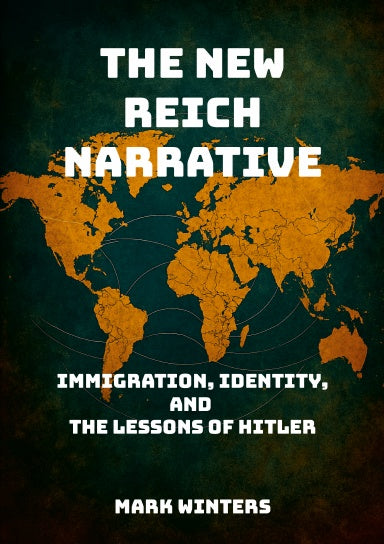
Mark Winters
The New Reich Narrative: Immigration, Identity, and the Lessons of Hitler
The New Reich Narrative: Immigration, Identity, and the Lessons of Hitler
Couldn't load pickup availability
The New Reich Narrative: Immigration, Identity, and the Lessons of Hitler
History’s most dangerous movements did not begin with violence. They began with narratives — stories about identity, belonging, threat and betrayal that gradually made the unthinkable thinkable. The New Reich Narrative examines how the rhetorical and psychological patterns of the Nazi era are re-emerging in contemporary political discourse around immigration and national identity — and what the lessons of history demand of us now.
Who This Book Is For
This book is for serious readers who want to engage with one of the most important and uncomfortable questions of our time: how do societies slide toward extremism, and what are the warning signs? It is for those who believe that understanding history honestly — however disturbing — is essential for preventing its repetition.
What You Will Learn
- The rhetorical and psychological mechanisms that enabled the rise of Nazism
- How contemporary political narratives around immigration echo historical patterns
- The psychology of scapegoating, dehumanisation and in-group/out-group thinking
- How ordinary people become complicit in extraordinary evil
- The role of media, propaganda and political language in shaping public opinion
- What the historical record demands of citizens in democratic societies today
- How to recognise and resist the early stages of political extremism
Why This Analysis Is Necessary
The lessons of the Nazi era are not simply historical curiosities. They are living warnings — about the fragility of democratic norms, the power of political narrative and the speed with which societies can move from tolerance to persecution. The New Reich Narrative takes those warnings seriously.
What Makes This Book Different
This book does not use historical comparison as a rhetorical weapon. It uses it as an analytical tool — with rigour, nuance and a genuine commitment to historical accuracy and intellectual honesty.
Ideal For Readers Interested In
- History of Nazism and the Holocaust
- Political extremism and radicalisation
- Immigration and national identity debates
- Political psychology and propaganda
- Democratic resilience and civic responsibility
Share